The Guide to the Dolomites in Summer
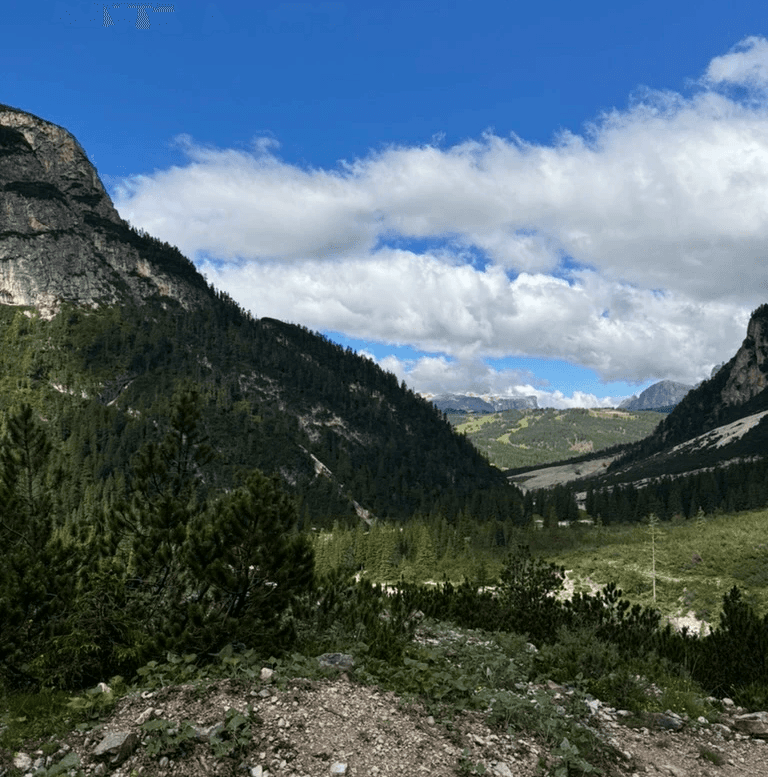
Where we'd walk, eat, and sleep if we had a week in June, July or September.
Summer in Italy, according to Instagram, is Amalfi, Puglia, and a Campari spritz. Summer in Italy, according to us, is a pair of hiking boots, a plate of Kaiserschmarrn at a rufigio at 2,300 metres, and a glass of red.
The Dolomites are the trip most travellers discover five years after they should have. They are not the Alps. They used to be Austria. The food is Austrian, the signage is trilingual, and the mountains look, honestly, a bit fake. Pink limestone towers. Green alpine meadows. Black storms that appear at 3pm and are gone by 5. Switzerland costs twice as much. France is taller and less interesting.
Here's how we'd spend a week.
Where to go
The Dolomites are not one place. Three valleys do most of the work, and picking the right base matters more than anything else in the trip.
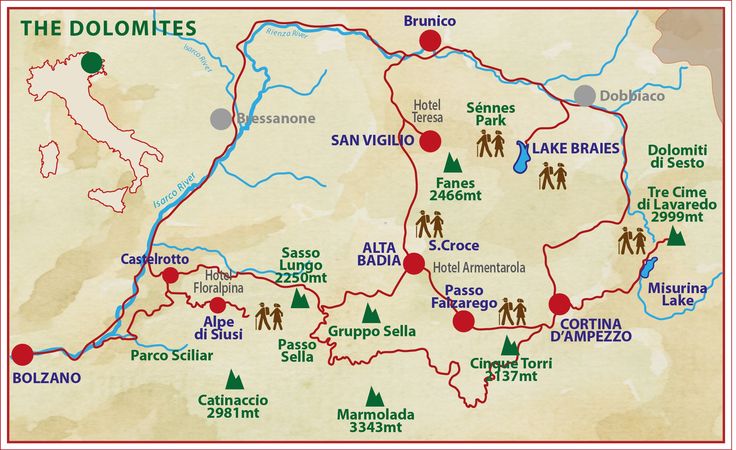
Val Gardena, with Ortisei as its hub, is the west side. Wooden chalets, a pedestrian main street, and two cable cars leaving from the centre of town (one to Seceda, one to Alpe di Siusi). First-trip friendly.
Alta Badia, with Corvara and San Cassiano as its twin villages, is the centre. The best food in the region, the quietest hotels, and walking access to the Sella range. This is the one for a second trip, or for couples.
Cortina d'Ampezzo is the east side. The glossier version. The 2026 Winter Olympics have pulled a lot of money into the town, and the renovations show. It's the loudest, the most expensive, and the easiest to do badly.
Our advice: two bases, not one. Four nights in Ortisei, three nights in Corvara or San Cassiano. Skip Cortina for the first trip.
The hikes
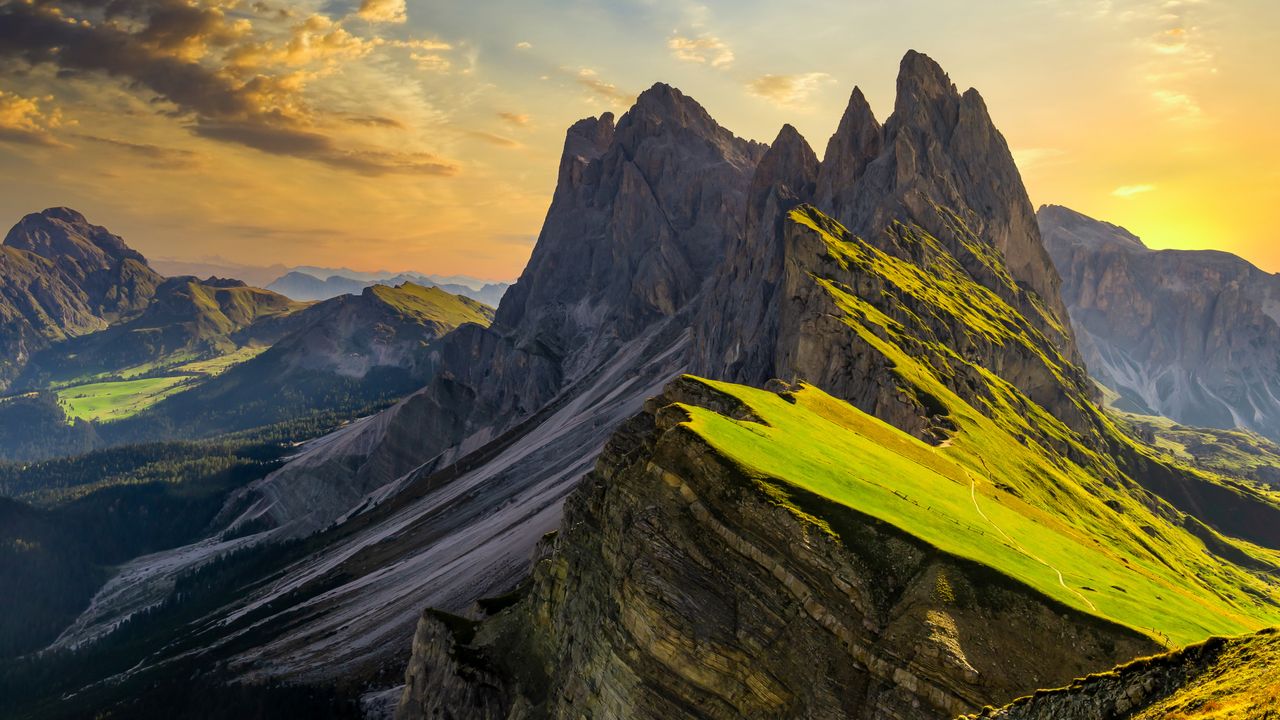
Seceda. The ridgeline you've seen a thousand times online. Take the cable car up from Ortisei on the first lift (usually 8:30am), walk the ridge in the morning light, and be back down before the coaches arrive at 10:30. If you want to earn it, hike down to Col Raiser instead of riding back. An hour and a half of descending into wildflowers.
Tre Cime di Lavaredo. The three towers are the symbol of the range. The 8.8-kilometre loop takes two and a half to five hours depending on how often you stop to take the same photograph. Go at sunrise or stay for sunset, never midday. Parking at Rifugio Auronzo is capped and you will be turned away after 10am in peak season.
Sassolungo (Saslonch). Our honest favourite. The loop around the Sassolungo group from Passo Sella is five to six hours, about eighteen kilometres, and sees a fraction of the crowd of Tre Cime despite delivering, in our view, better and more varied views.
Alpe di Siusi. Europe's largest high-altitude meadow. Worth the trip only from mid-June to mid-July, when the wildflowers are actually out. Outside that window, it is a beautiful field.
Lago di Sorapis. The turquoise lake above Cortina that every second reel has ruined. Still worth the six-kilometre in-and-out if you start before 7am. Don't bother after.
And if you want the best half-day walk that nobody queues for, take the cable car up from Passo Falzarego to Rifugio Lagazuoi, eat lunch on the terrace, and walk down via the First World War tunnels. A history lesson and a view you will never forget.
A note on via ferrata: If you came for the via ferrata, you came to the right place. The "iron paths" began here in the First World War, when Italian and Austrian troops bolted ladders, pegs and cables into the cliff faces to move men across exposed rock. The routes are still here today. Ferrata Lagazuoi on Cortina's western flank is the classic beginner's route. Ferrata delle Trincee on the Padon ridge facing Marmolada is the historian's pick, tracing actual wartime trenches. Hire a guide for your first one. Don't attempt one without a harness, a kit, and someone who knows what they're doing.
Where to stay
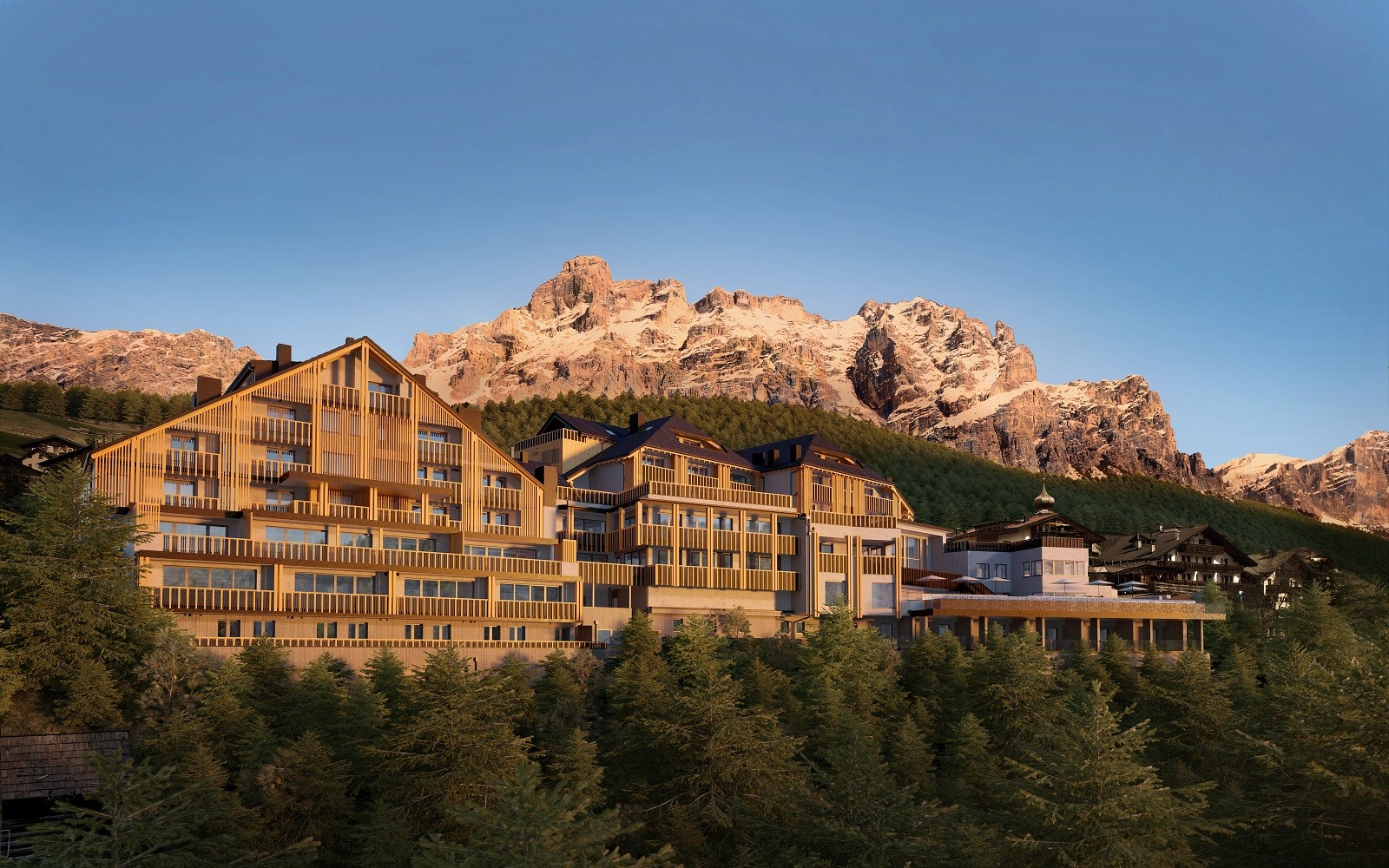
Aman Rosa Alpina in San Cassiano. Reopened in July 2025 after a full Jean-Michel Gathy redesign, now with 51 rooms, four dining concepts, and the best service in the region. Super luxe, super high end.
Hotel La Perla in Corvara. Family-run, warm, timber-panelled, the opposite of Forestis. One of the serious wine cellars in Italy and a kitchen that makes you want to stay in for dinner. This is a generous family-style hotel which is becoming increasingly rare.
Forestis above Brixen, on the southern slope of Plose at 1,800 metres. Adults-only. Scandinavian minimalism inside three timber-clad towers. A two-thousand-square-metre spa with an indoor-outdoor pool that has, without argument, the best view from a hotel pool we have swum in.
Adler Spa Resort Dolomiti in Ortisei. The spa is genuinely excellent. The hotel is large, which is the trade-off. Go for the wellness, not the intimacy.
Where to eat
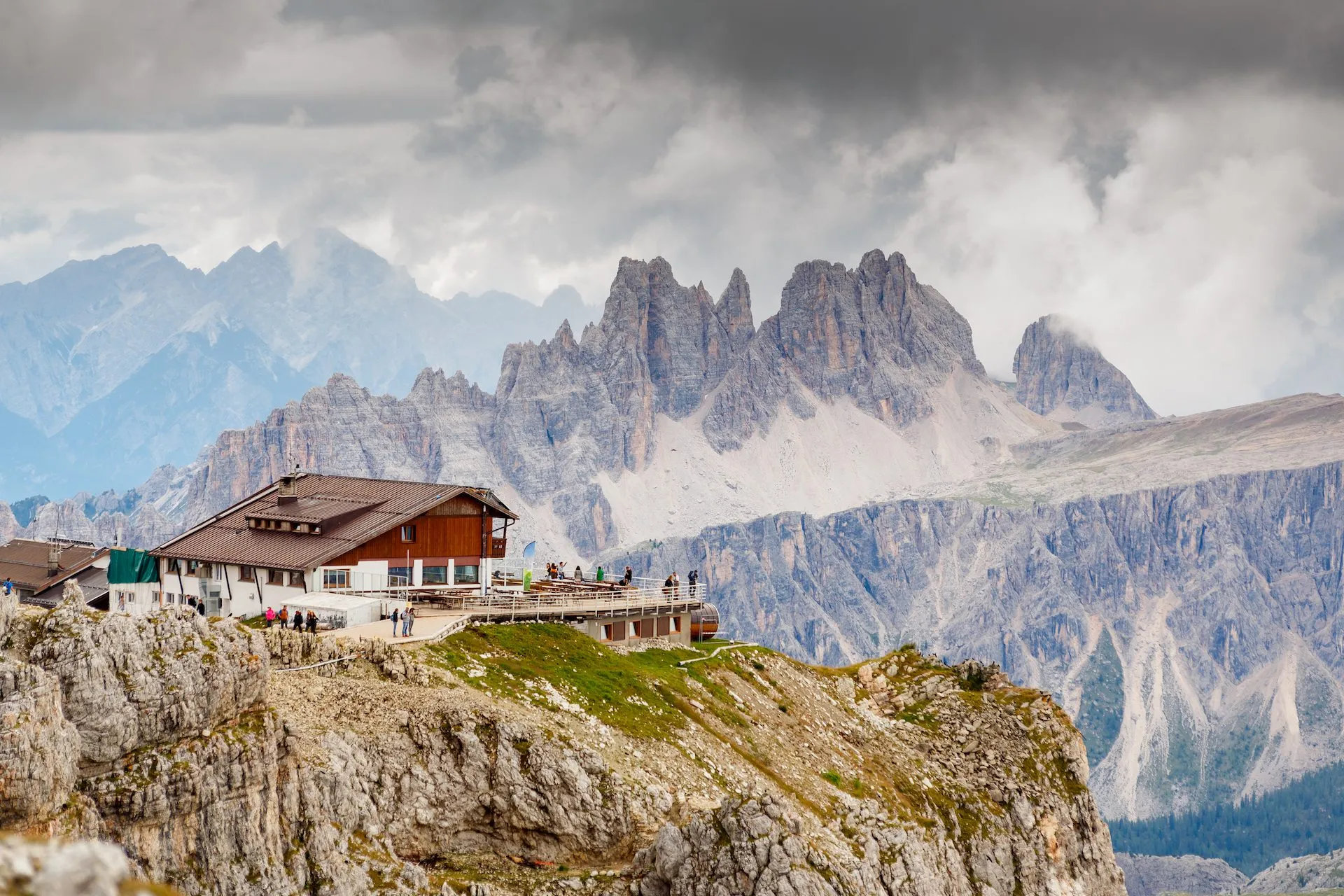
The rifugi are the reason. A rifugio is a mountain hut that serves lunch. You walk to it, you eat, you walk out. The food is Austrian with Italian loyalties on the wine list. Order the knödel (dumplings, either spinach or speck), the goulash with polenta, the tagliatelle with ragù di cervo (venison), and the apple strudel with cream. Never skip the strudel and oh, also make sure to order the Kaiserschmarrn - its a local pancake and is simply the best!
Some of the places we suggest, but its best to check with the concierge at your hotel which is on your route of the day:
Rifugio Scotoni in Alta Badia, the grill hut with the famous mixed-meat platter. Book ahead, always.
Rifugio Lagazuoi for the view, accessed from the Falzarego cable car.
Rifugio Fanes on the Fanes plateau, the classic alpine hut experience.
Rifugio Averau above Cortina, with the best terrace in the region.
Rifugio Piz Boè at the top of the Sella cable car, 2,871 metres, the highest rifugio in the Dolomites.
Need to know
Book three to six months ahead for July and August. Everything fills, including the rufugio lunches at the named ones.
Rent a car. The bus network exists and is fine between villages in the same valley, but the trip is a series of valleys, and you will lose a day a week to transfers without your own wheels.
The weather turns at 3pm most afternoons in July. Start early, lunch at a rifugio, be off the exposed ridges by two. This is not paranoia, it is hiking.
And pack for every season. Snow is possible above 2,500 metres in June. Thirty degrees is possible in the valleys. A fleece, a shell, and a pair of shorts are all packing for the same day.
Travel like mr katz
Every trip is bespoke and unique, let us plan your next trip together.

Anything is possible